
Nude vs. Naked – A Practice in Radical Self-Honesty (Part I)

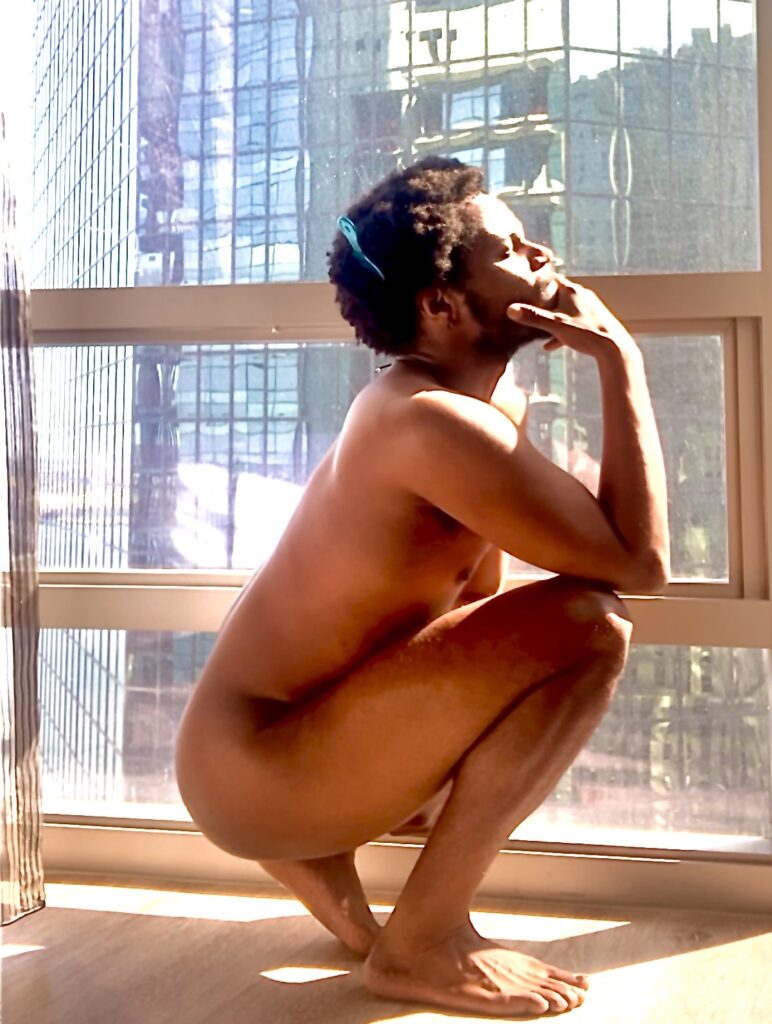
How language, embodiment, and Satya reveal the difference between being uncovered and being truly seen.
Sure, It’s a Matter of Semantics
So please, “bare” with me… haha.
This reflection is rooted in my personal experiences of teaching, learning, and living in the nude—experiences that ultimately shaped a newfound philosophical approach to language, embodiment, and self-honesty.
Nude and naked are often used interchangeably—and understandably so. They are, after all, synonyms. But as someone who deeply loves language and the art of words, I’ve learned that subtle distinctions can open entirely new doors of understanding.
I enjoy wordplay—especially when exploring origins, etymology, and modern usage. Words are not static; they evolve. Letters become words, words become phrases, and phrases become metaphors, clichés, euphemisms, double or triple entendres. Even expletives, when used with awareness, have their place.
Words matter because words carry energy.
Words create.
Words manifest.
Words make people feel.
Words can “keel.”
Words can heal.
(See what I mean?)
And so…
Nude And/Or Naked… Take Your Pick
When I think of NUDE, or being “in the nude,” it evokes a generalized, physical state—defined as being devoid of natural or conventional coverings such as clothing or fabric.
When I think of NAKED, the physical meaning still applies: bare, uncovered, wearing nothing at all. But naked carries something more.
To be naked also means “to be devoid of concealment or disguise—unfiltered, unadorned, undefended, exposed”. Think of phrases like “the naked truth.” That expression goes far beyond the physical. It becomes nuanced, emotional, even spiritual.
At face value, these are neutral definitions—mere adjectives—until meaning and context are applied. (And yes, nudism exists as a noun, while “nakedism,” sadly, does not… though it would be a pretty cool word.)
This is where I began thinking more deeply.
How do these definitions show up in my own life—emotionally, physically, spiritually?
How can I embody nakedness in its fullest sense?
In my experience, nude and naked are not the same in action or energy.
By energy, I mean how each word is used, perceived, and lived—especially in relation to lifestyle choices like nudism or naturism. Words gain power when we give them attention. Any word you revere, question, or identify with begins shaping your experience.
When I think of being nude, I think of a physical state.
When I think of being naked, I think of transparency—no filters, no armor, no hiding.
Most of us are fairly adept at being nude.
But how adept are we at being naked?
“Change your point of view: We tend to look in the same direction as we go through life. By changing what we look at—or even the angle through which we look—we can change our thoughts and lives.”— Men’s Natural Yoga & Fitness
So How Do We Get “Naked”?
How naked are you with yourself?
What does that even mean?
Through the yogic lens of Satya—the yama of truthfulness—are we being radically honest with ourselves?
To be naked is to strip away mental, emotional, and energetic layers. It is raw honesty about our current state of being.
Are we asking ourselves tough questions?
Are we challenging our perspectives?
Are we questioning what we’ve been taught?
Are we open to critique and confronting our biases?
Who are we when we are completely alone?
That last one hits hard, especially in today’s political and socio-economic climate. Because who we are in private, when we’re most comfortable and unobserved, is who we truly are.
Ironically, while emotional nakedness can feel daunting, many people find physical nudity relatively easy—changing clothes, showering, transparent communication, even physical vulnerability.
Take me, for example. Beneath the surface, beyond aesthetics and visual cues, I realized I hadn’t truly gotten naked with myself in a very long time.
From a Yogic Lens: Satya
I don’t label myself a nudist or naturist in daily life. If anything, I see myself as a respectful guest within those traditions.
Labels come with explanations, defenses, and the pressure to “come out” or be boxed into polarized lifestyle categories. That never quite resonated with me.
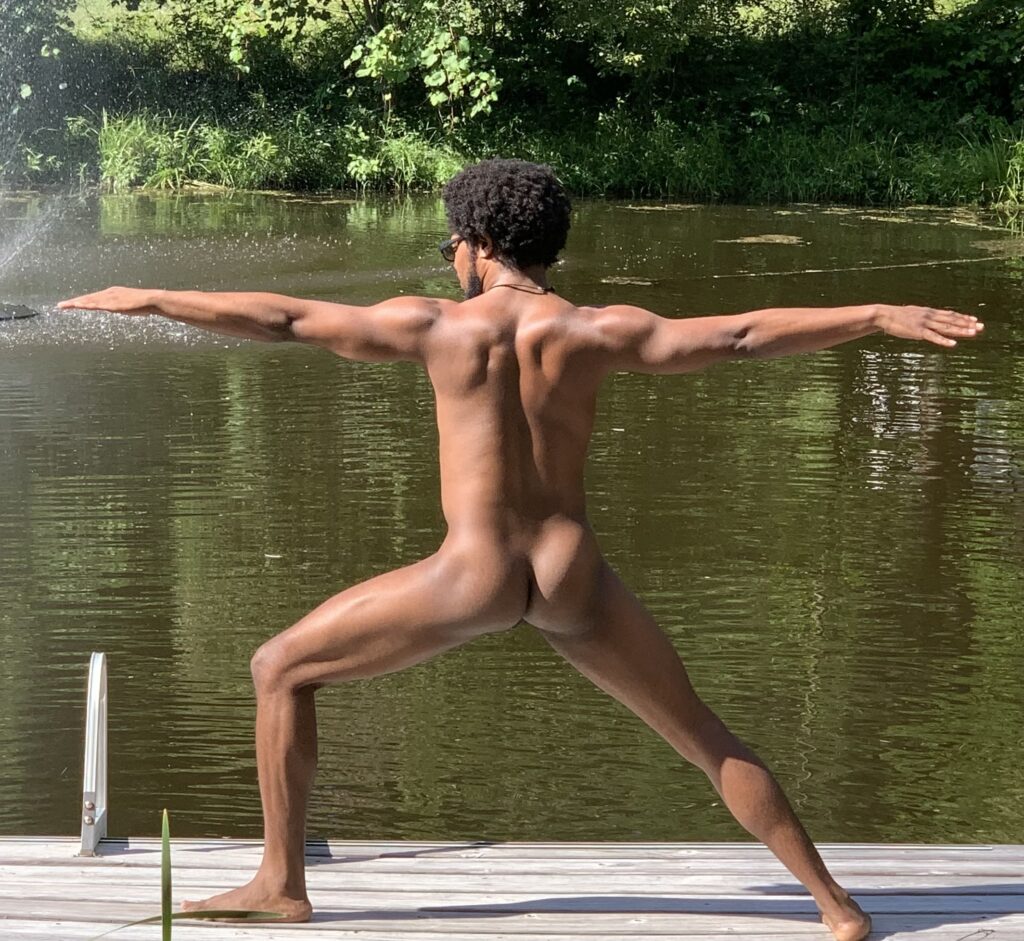
That said, I do participate in social nude events such as gatherings, workshops, classes, and events that are often centered on high-vibration, communal energy. These spaces invite intellectual engagement and non-sexual physical practices like yoga asana, NuDance, meditation, hiking, camping, and swimming.
In that sense, I suppose I am a nudist or naturist.
But then I asked myself:
What about the opposite?
Why not do the things I normally do at home—in the nude?
And more importantly:
What do I do differently when I’m nude?
How naked am I actually being in those moments?
At home, nudity had always been purposeful—showering, dressing, intimacy, teaching, or attending online nude classes. In looking back, much of my nudity felt… performative.
I almost always wear something. Whether it is underwear, a robe, socks, or a hat. Sometimes I dress as if I’m going out, only to realize I’m doing it to feel a certain way, almost as if I am in costume.
As I write this now, I’m sitting here in the nude (well, I have a button up on)—and about as naked as I’ve ever been with my writing. It feels symbolic. I feel open. Slightly vulnerable. And it’s just me and this keyboard.

This is my first time doing this for no reason other than being.
I’m used to layers—things that comfort, protect, and encase me. Clothing does that. Right now, I have a towel loosely draped around me, still drying off from sweating earlier. I feel grounded, present… surprisingly at ease.
I’m sensitive to external stimuli, so I’ve got a cup of coffee nearby anchoring me. And yet, I’m not rushing to put anything on.
If I’m going to talk about it, I have to walk it.
And yes—this may be a matter of semantics. But semantics often lead to specificity, awareness, and transformation.
Perspective of Experience
Over the years, I’ve had deeply meaningful experiences at nudist- and naturist-friendly retreats, workshops, and gatherings involving dance, meditation, movement, massage exchange, partnered yoga, somatic work, and yoga asana.
I’ve hiked, camped, explored, and simply existed in nature—in the buff, across nude-friendly beaches, parks, and spaces around the world.
I’ve been nude in communal settings across the U.S. and Europe—among cisgender men, transgender men, gay men, hetero men, and even in co-gendered spaces.
I have friends who are trans, cis, and non-binary who identify as naturists or simply enjoy nude-affirming, safe environments.
I share these experiences with the intention of uplifting others—starting with radical honesty toward myself, because that’s where healing begins.
I encourage you to explore this gently, at your own pace. Try being nude while doing something you normally wouldn’t—provided it’s safe. This isn’t about risky activities or abandoning common sense.
Start simple:
Writing.
Reading.
Meditating.
Washing dishes.
Yoga or calisthenics.
Making love—with the lights on.
Even standing in front of a mirror nude for 3–5 minutes can be confronting—and cathartic. Let whatever arises come forward without judgment.
Be radically honest.
Be open.
Be compassionate.
If judgment appears, notice it. Name it. Then keep moving.
Don’t just be nude—get naked with yourself. It’s a powerful place to begin, especially with a new year approaching.
“Free your ass… and your mind will follow.”
Peace, Love & Overstanding




Very nice