
Nude vs. Naked – A Practice in Radical Self-Honesty (Part II)

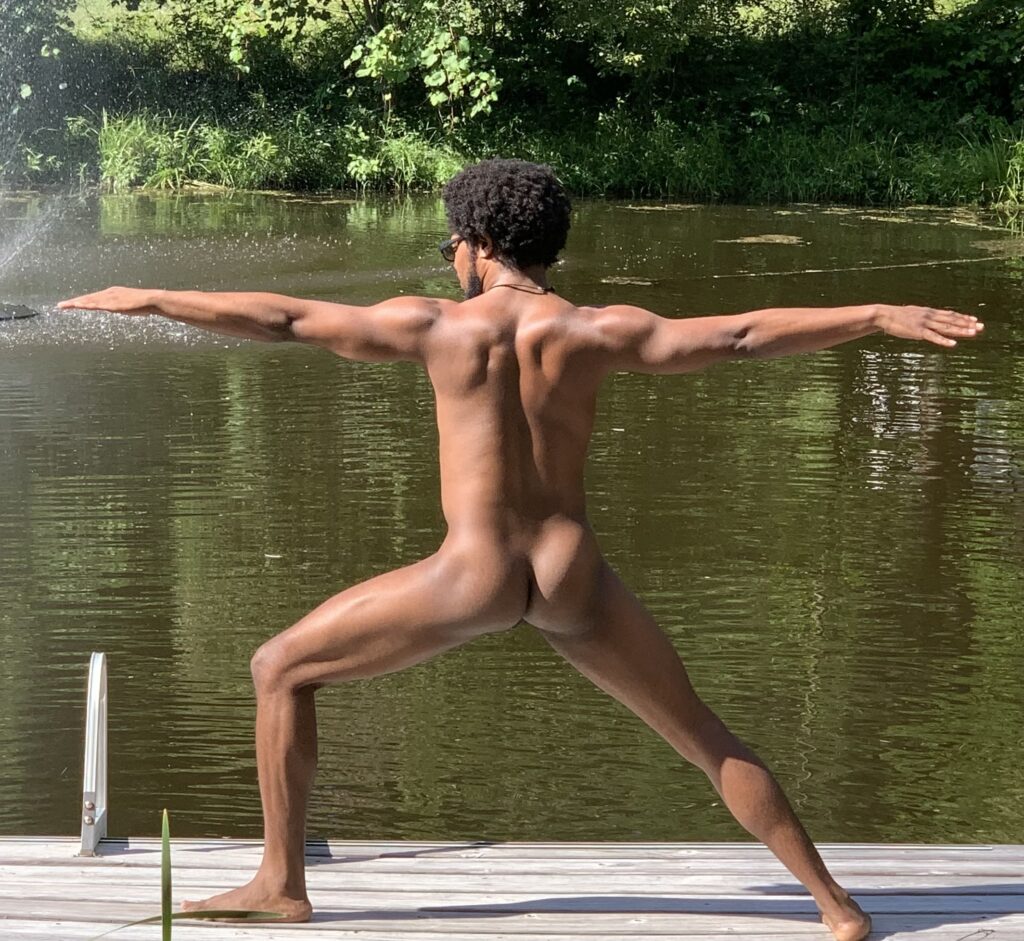
Practical tools for cultivating embodied honesty, and practicing Satya beyond surface level exposure
This reflection is not about convincing anyone to live nude or adopt a particular identity. It is an invitation to examine how we relate to exposure—physically, emotionally, and internally—and what honesty looks like when there is nothing left to hide behind.
Throughout this piece, ‘nude‘ refers to the state of being unclothed.
‘Naked’ refers to the internal state of being unfiltered, undefended, and honest.
The distinction matters because most people can remove clothing, but far fewer can sit with themselves without distraction, armor, or avoidance.
Nude vs. Naked — A Practical Distinction
Being nude is situational.
Being naked is relational—especially with oneself.
You can be nude and still guarded.
You can be clothed and deeply naked.
To ground this distinction, pause and ask:
- When I am physically uncovered, do I feel present or performative?
- When I am alone, do I seek comfort immediately—or do I stay with myself?
- What changes in my thoughts when there is nothing external to adjust?
This is not a judgment but rather an observation.
What “Getting Naked” Actually Means
From a yogic lens, specifically Satya (truthfulness), nakedness is a practice of radical self-honesty.
Practically speaking, this means:
- Not editing your thoughts before you acknowledge them
- Not bypassing discomfort with distraction
- Not rushing to fix what you haven’t fully felt
Getting naked does not require only nudity. In addition, it requires presence. Truthful, transparent, and active presence.
To begin, ask yourself—without needing an immediate answer:
- What am I avoiding feeling right now?
- What part of myself do I soften, hide, or armor up?
- Who am I when there is no one to perform for?
Practicing Nakedness: Simple, Grounded Exercises
You do not need to overhaul your life, so please start small and stay curious. And as always, stay safe.
Practice 1: Neutral Nudity
Choose an activity you already do daily—writing, reading, washing dishes, stretching.
Try doing it nude once.
Instructions:
- Set a timer for 5–10 minutes
- Do not evaluate your body
- Notice your thoughts
Ask afterward:
- Did I feel exposed, distracted, or relaxed?
- What did I want to cover—and why?
Practice 2: Mirror Presence
Stand nude in front of a mirror for 3–5 minutes.
Instructions:
- Do not pose
- Do not correct posture
- Let your face remain neutral
You are not here to affirm or criticize—only to observe.
Notice:
- Where do your eyes go first?
- What language does your mind use?
- Does compassion or judgment arise?
Write down exactly what came up afterward.
Practice 3: Naked Honesty (Clothed or Not)
Sit quietly and answer one question in writing:
What am I pretending not to know about myself right now?
Don’t censor yourself.
Do not beautify the answer.
Do not rush to judgment.
This is nakedness.
Grounding the Experience
If at any point you feel overwhelmed:
- Put your feet on the floor
- Take slow breaths
- Drink water or warm tea
- Wrap yourself in something soft
Grounding is not an option when it is an essential part of honesty.
Remember: nakedness does not have to be exposure for exposure’s sake.
It is exposure with care, self awareness and practical application.
“Free your ass, and your mind will follow… Free your heart, and your soul will follow”
Peace, Love & Overstanding




Thank you 😊